
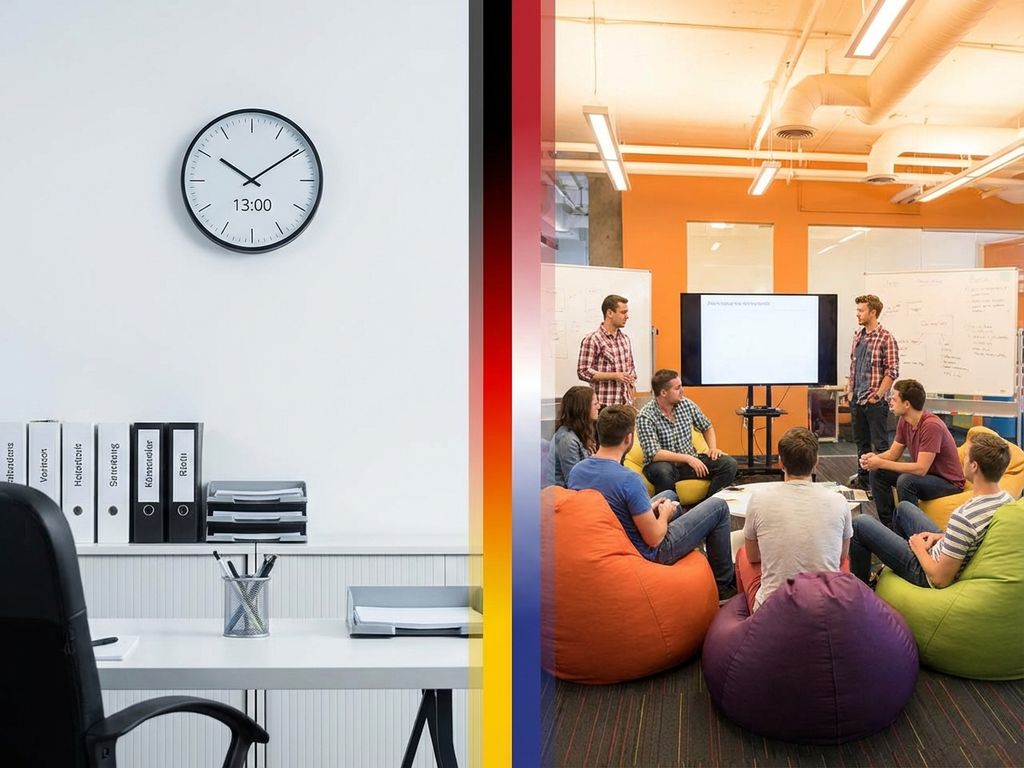
German business culture differs significantly from American business culture in several fundamental ways. Germans prioritise structure, direct communication, and formal hierarchies, while Americans favour flexibility, relationship-building, and informal interactions. These differences affect everything from meeting styles and decision-making processes to work-life balance expectations and professional relationships. Understanding these cultural contrasts helps international business professionals navigate Cross-Cultural communication more effectively.
What makes German business culture fundamentally different from American business culture?
German business culture emphasises structured processes and formal hierarchy, while American business culture values flexibility and egalitarian relationships. Germans prefer detailed planning, thorough preparation, and methodical decision-making. Americans typically embrace adaptability, quick pivots, and collaborative leadership styles.
The philosophical differences run deep. German companies often maintain clear hierarchical structures where decisions flow from senior management downward. Employees respect authority and follow established protocols. American organisations frequently adopt flatter structures that encourage input from various levels and promote open dialogue between management and staff.
Decision-making processes reflect these cultural values. Germans invest considerable time in research and analysis before reaching conclusions. They expect comprehensive documentation and prefer consensus-building through detailed discussion. Americans often make faster decisions with available information, viewing speed and agility as competitive advantages.
Workplace relationships also differ substantially. Germans maintain professional boundaries and separate personal life from business interactions. Americans often blur these lines, using personal connections to build trust and facilitate business relationships.
How do Germans and Americans approach meetings and communication differently?
Germans conduct highly structured, agenda-driven meetings with specific objectives and detailed preparation. Americans prefer more flexible meetings that allow for spontaneous discussion and relationship-building through informal conversation.
German meetings typically begin punctually and follow predetermined agendas strictly. Participants come prepared with relevant documents and expect thorough discussion of each agenda item. Side conversations and off-topic discussions are discouraged. The focus remains on achieving specific outcomes and making concrete decisions.
American meetings often start with small talk and relationship maintenance. Participants may introduce new topics spontaneously, and discussions can evolve organically. Americans view meetings as opportunities to build rapport and explore creative solutions collaboratively.
Communication styles present another significant difference. Germans communicate directly and explicitly, stating opinions clearly without excessive diplomacy. They view this directness as honest and efficient. Americans often use indirect communication, softening criticism with positive comments and reading between the lines for underlying messages.
Feedback approaches reflect these communication preferences. Germans provide straightforward criticism focused on improving performance. Americans typically sandwich negative feedback between positive comments, which Germans may find confusing or insincere.
Why do German and American work-life balance expectations clash?
Germans maintain strict boundaries between work and personal time, while Americans often blend professional and personal responsibilities throughout their day. These contrasting approaches create misunderstandings in international business relationships.
German employees typically work focused, productive hours during designated times and disconnect completely during personal time. They take their allocated holiday time seriously and expect colleagues to respect their time off. Evening emails and weekend calls are generally unwelcome and considered unprofessional.
American professionals often remain accessible outside traditional working hours and may handle business communications during personal time. They frequently work longer hours but with more flexibility in scheduling and location. Americans may view constant availability as dedication and professionalism.
Holiday expectations differ dramatically. Germans typically take several weeks of consecutive holiday and expect complete disconnection from work responsibilities. Americans often take shorter breaks and may check emails or handle urgent matters while on holiday.
These differences can strain international partnerships when German colleagues appear unresponsive during their personal time, while American partners may seem to lack boundaries or work-life balance.
What are the biggest relationship-building differences between German and American business cultures?
Germans build professional relationships through demonstrated competence and reliability, while Americans emphasise personal connections and informal networking. These different approaches can create challenges in international business partnerships.
German professionals typically establish trust through consistent performance, technical expertise, and meeting commitments. They prefer to prove their worth through work quality rather than personal charm. Small talk is minimal, and conversations focus on business matters and professional topics.
Americans invest significant time in personal relationship-building through informal conversations, shared experiences, and finding common interests. They use small talk to establish rapport and may discuss family, hobbies, or personal interests to build connections that facilitate business relationships.
Networking approaches reflect these cultural differences. Germans network within professional contexts, focusing on industry expertise and business opportunities. Americans network more broadly, viewing personal relationships as valuable business assets regardless of immediate professional relevance.
Trust-building processes also vary significantly. Germans develop trust gradually through consistent professional interactions and proven reliability over time. Americans may establish trust more quickly through personal connections and shared experiences, sometimes before thoroughly evaluating professional competence.
How crossculture academy helps with German-American business cultural differences
We provide comprehensive intercultural training solutions specifically designed to bridge German-American business cultural gaps. Our programmes help professionals understand and navigate these cultural differences effectively in international business environments.
Our German-American cultural competence solutions include:
- Tailored coaching sessions addressing specific communication challenges between German and American teams
- Interactive workshops covering meeting styles, feedback approaches, and relationship-building strategies
- E-Learning modules focusing on work-life balance expectations and professional etiquette differences
- 24/7 expert hotline providing guidance on specific intercultural business situations
- Customised training programmes for organisations working across German-American markets
Ready to improve your German-American business relationships? Contact us today to discuss how our intercultural training solutions can help your team navigate cultural differences successfully and build stronger international partnerships.