
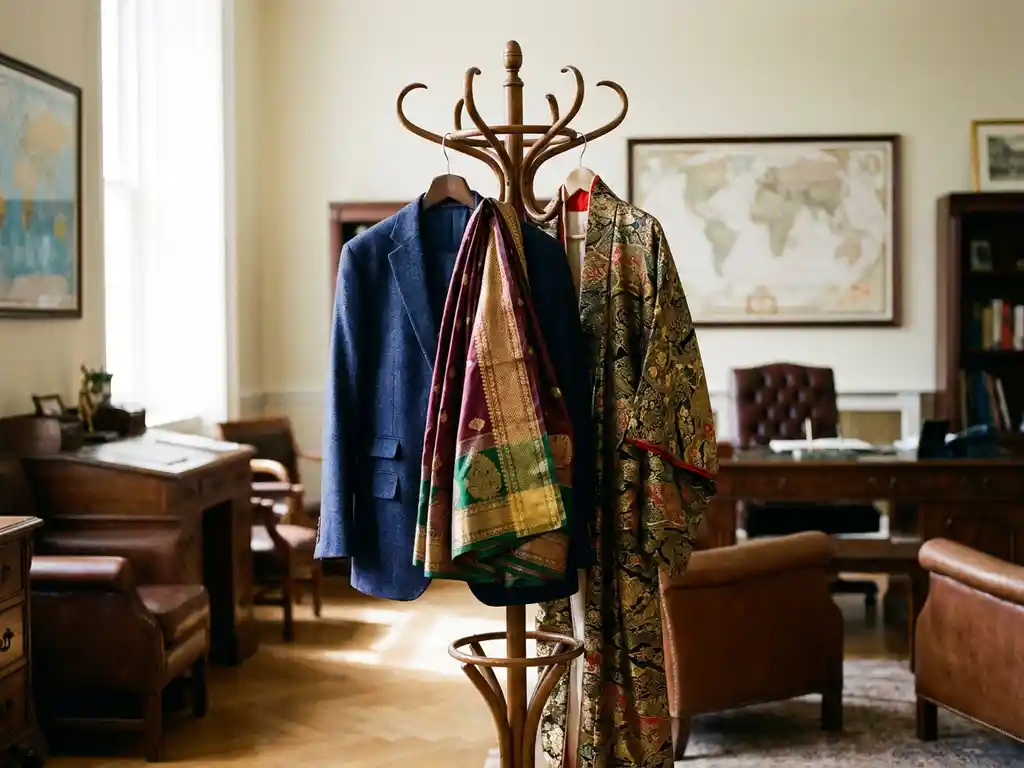
Professional dress codes vary significantly around the world, shaped by cultural values, religious traditions, climate, and industry norms. In some countries, formal suits signal respect and seriousness; in others, modest or traditional attire carries far more weight than Western business fashion. Understanding these differences is not just about avoiding embarrassment — it helps you build trust and show genuine respect for the people you work with. Below, we answer the most common questions about global business dress codes so you can walk into any meeting with confidence.
Which countries have the most formal business dress codes?
Japan, South Korea, and Germany consistently rank among the countries with the most formal professional dress codes. In these cultures, conservative, well-fitted attire signals professionalism and respect. Dark suits for men and formal business wear for women are standard expectations, and deviating from them can be interpreted as a lack of seriousness or preparation.
In Japan, appearance at work is closely tied to group identity and professionalism. Neutral colors, minimal accessories, and immaculate grooming are the norm. South Korea shares a similarly conservative outlook, with formal suits expected in most corporate environments. Germany, while slightly more relaxed in creative industries, still favors understated, high-quality clothing in traditional business settings.
Other notably formal business cultures include:
- France: Style matters as much as formality — polished, elegant attire is expected, and looking put-together is a sign of competence.
- China: Conservative formal wear is standard in most corporate contexts, though expectations vary by city and industry.
- India: Formal Western business attire is common in multinational settings, though traditional dress is also respected and sometimes preferred.
- United Arab Emirates: Smart formal wear is expected, with additional sensitivity required around modesty standards.
Countries like the United States, the Netherlands, and Australia tend toward business casual in many sectors, though finance and law still demand formal attire. Knowing the specific industry and company culture within a country matters just as much as knowing the country itself.
How do dress codes differ between Western and Asian business cultures?
Western business cultures, particularly in the US and UK, have moved toward business casual in many industries, where a neat blazer and smart trousers often replace the traditional suit. Asian business cultures, by contrast, tend to maintain stricter formality, with suits and conservative dress remaining standard in most professional settings, especially for first meetings or client-facing roles.
In Western contexts, individuality in dress is generally more accepted. Expressing personal style through clothing is not seen as unprofessional. In many Asian business cultures, however, conformity in appearance signals respect for the group and the occasion. Standing out through bold colors or unconventional clothing choices can unintentionally send the wrong message.
There are also meaningful differences in how formality shifts over time. In the West, once a business relationship is established, dress codes often relax. In countries like Japan or China, maintaining formal dress across multiple meetings is a way of showing continued respect, regardless of how well you know your counterpart.
It is worth noting that Asian business cultures are not uniform. Singapore and Hong Kong have absorbed significant Western business influence, making them more hybrid in their expectations. Meanwhile, more traditional corporate environments in Tokyo or Seoul remain firmly conservative.
What role does religion play in workplace dress codes globally?
Religion plays a significant role in shaping professional dress codes in many parts of the world. In predominantly Muslim countries, modest dress is expected for both men and women, which often means covered arms and legs, and for women, a headscarf or hijab. In countries like Saudi Arabia, Iran, and parts of Malaysia, these expectations are not just cultural preferences — they carry social and sometimes legal weight.
In Israel, Jewish religious observance influences dress norms in certain sectors, with some workplaces expecting modest attire in line with Orthodox practices. In India, Sikh employees may wear turbans, and Hindu cultural norms around modesty shape expectations in more traditional business environments.
Even in more secular countries, religious dress is an important consideration. In the UK, Germany, and the US, employees have legal protections to wear religious dress at work, including headscarves, turbans, kippahs, or crosses. Employers and visiting professionals alike should be aware of and respectful toward these expressions of faith.
When traveling for business to a country where religion strongly influences dress, the practical advice is simple: research the local norms in advance, dress modestly when in doubt, and never assume that Western business casual is universally appropriate.
Why do dress codes vary so much within the same country?
Dress codes vary within the same country because of differences in industry, company culture, region, and generation. A tech startup in Berlin operates by entirely different dress norms than a law firm in the same city. A financial institution in Mumbai expects formal attire, while a creative agency a few streets away might welcome casual wear. National dress code generalizations are useful starting points, but they rarely tell the whole story.
Regional differences matter too. In the United States, business culture in New York tends to be more formal than in San Francisco, where the tech industry has normalized casual dress even in executive roles. In China, Shanghai and Shenzhen have more cosmopolitan, flexible dress expectations compared to more traditional corporate environments in other cities.
Company size and hierarchy also shape dress expectations. Larger, more established corporations tend to maintain stricter dress codes as part of their professional identity. Younger startups and smaller firms often adopt a more relaxed approach to signal a flat organizational culture and creative freedom.
Generational shifts are changing things too. Younger professionals globally are pushing for more casual, comfortable workplace attire, and many organizations are adapting. This means that even within a single country, a company founded ten years ago might have very different expectations from one founded last year.
What should you wear to a business meeting in a foreign country?
When attending a business meeting in a foreign country, your safest approach is to dress one level more formally than you think is necessary. It is far easier to relax your appearance once you understand the local culture than to recover from making a poor first impression. Research the country, the industry, and, if possible, the specific company before you travel.
Here are practical steps to get it right:
- Research the country’s general business dress norms — a quick search or consultation with a cultural expert gives you a reliable baseline.
- Consider the industry — finance, law, and government tend to be formal worldwide; tech and creative sectors are more variable.
- Check the company’s online presence — employee photos on LinkedIn or the company website often reveal the dress culture clearly.
- Pack neutral, conservative clothing — dark suits, modest cuts, and minimal accessories work across most formal business cultures.
- Be aware of religious or cultural sensitivities — cover arms and legs in conservative countries, avoid overly casual footwear, and remove shoes when entering certain spaces.
- Ask your local contact — if you have a colleague or host in the country, asking directly about dress expectations is both practical and shows cultural awareness.
For meetings in countries like South Korea or Japan, err strongly on the side of formal. For meetings in the United States, business casual is often acceptable outside of finance and law, but a smart blazer never hurts. When visiting the Middle East or South Asia, prioritize modesty above all else.
The goal is not to perfectly imitate local dress — that can sometimes come across as performative. The goal is to show that you have made a genuine effort to respect the local professional culture. That effort itself communicates a great deal about your character as a business partner.
How Cross-Cultural Academy helps you navigate global dress codes and beyond
Dress codes are just one piece of the much larger puzzle of working across cultures. Getting the attire right matters, but understanding the communication styles, hierarchy expectations, negotiation norms, and social etiquette of a country is what truly builds strong international business relationships.
At Cross-Cultural Academy, we help professionals and organizations prepare for exactly these challenges. Our services include:
- Intercultural training for 140+ countries — covering everything from business etiquette and dress norms to communication styles and meeting culture.
- Flexible E-Learning courses — so you can prepare at your own pace, wherever you are in the world.
- 500+ videos and articles — covering practical intercultural topics relevant to real business situations.
- Expert hotline available 24/7 — for those moments when you need fast, reliable cultural guidance before an important meeting.
- Tailor-made global mobility solutions — designed for organizations sending teams abroad or managing multicultural workplaces.
Whether you are preparing for your first international business trip or building a globally competent team, we are here to help you show up with confidence. Get in touch with us to find out which solution fits your needs best.