
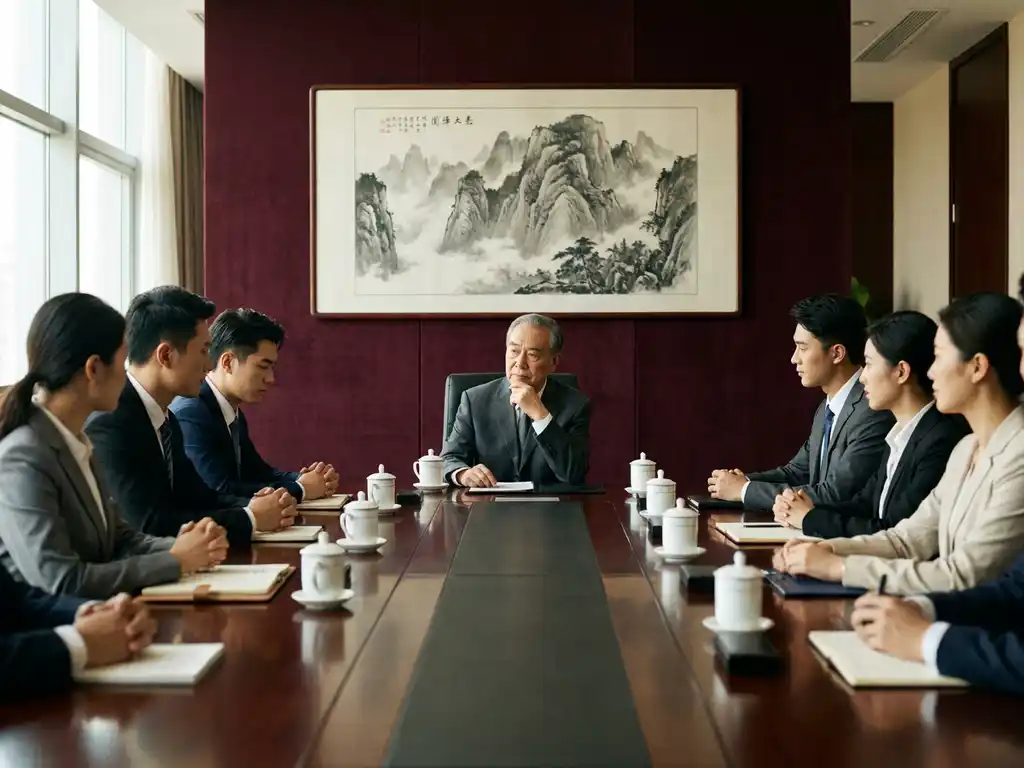
Hierarchy plays a central role in Chinese business culture. Seniority, title, and organizational rank shape nearly every interaction in a Chinese workplace, from how meetings are run to how decisions get made. Understanding this structure is not just polite awareness — it directly affects whether your business relationships in China succeed or stall. The sections below unpack the most common questions professionals ask when preparing to work with Chinese partners or colleagues.
How does Confucianism shape workplace hierarchy in China?
Confucianism shapes workplace hierarchy in China by establishing a clear moral framework around respect for authority, seniority, and social order. These values, rooted in centuries of Chinese philosophy, translate directly into how employees relate to managers, how teams communicate internally, and what behaviors are considered professional or disrespectful.
The Confucian concept of wu lun, or five key relationships, places the ruler-subject and father-son dynamic at the center of social life. In a business context, this becomes the manager-employee relationship. Employees are expected to show loyalty and deference upward, while leaders are expected to show responsibility and care downward. This is not blind obedience but a structured form of mutual obligation.
In practice, this means junior employees rarely challenge their managers openly, even when they disagree. Feedback flows downward, not upward. Decisions are made at the top and communicated as direction rather than discussion. For foreign professionals used to flat hierarchies or open debate, this can feel rigid. But within the Chinese framework, it reflects a deep respect for experience and social stability.
Who holds decision-making power in Chinese companies?
In Chinese companies, decision-making power sits firmly at the top. Senior leaders, often the CEO or department head, hold final authority on most significant matters. Middle managers rarely act without explicit approval from above, and consensus-building happens within leadership circles rather than across teams.
This top-down structure means that getting to the right person matters enormously. If you are negotiating a deal or trying to move a project forward, meeting with mid-level contacts may produce friendly conversations but little concrete progress. Real decisions require the involvement of someone with genuine authority.
Foreign professionals often make the mistake of assuming that the person they communicate with most frequently is also the person who decides. In Chinese organizations, the most visible contact may be a liaison or coordinator, not the actual decision-maker. Building a relationship with senior leadership, or at least ensuring they are aware of and engaged in the conversation, is important for any meaningful outcome.
What is ‘face’ (mianzi) and how does it relate to hierarchy?
Face, or mianzi, refers to a person’s social reputation, dignity, and standing in the eyes of others. In Chinese business culture, face is closely tied to hierarchy because a person’s rank determines how much face they are expected to have and how carefully others must protect it during interactions.
Losing face in front of colleagues or subordinates is a serious matter. It can damage trust, strain relationships, and even derail business deals. This is why direct criticism, public disagreement, or blunt refusals are rare in Chinese professional settings. Instead, concerns are raised privately, disagreements are softened with indirect language, and refusals often come in the form of vague delays rather than a clear “no.”
Giving face is equally important. Acknowledging someone’s seniority, praising their expertise in front of others, or deferring to their judgment publicly are all ways of showing respect that strengthen the relationship. For foreign professionals, learning to read these signals, and to give and protect face appropriately, is one of the most practical skills you can develop when working with Chinese partners.
How should foreign professionals address Chinese colleagues and superiors?
Foreign professionals should address Chinese colleagues and superiors using their formal title and surname. In a business setting, this typically means using “Director Wang,” “Manager Li,” or the equivalent title plus family name. Using first names without an invitation to do so can come across as presumptuous or disrespectful, particularly with senior contacts.
Chinese names are structured with the family name first and the given name second, which is the reverse of Western convention. So if someone introduces themselves as “Zhang Wei,” Zhang is the family name. When in doubt, it is always safer to use the title and family name until the other person explicitly invites a more informal approach.
In international settings or with Chinese professionals who have worked abroad, there is often more flexibility. Many Chinese businesspeople adopt an English first name for ease of communication with foreign colleagues, and they will usually offer it early in the introduction. If they do, feel free to use it. If they do not, stick with the formal address. This small adjustment signals cultural awareness and earns genuine respect from your Chinese counterparts.
For a deeper look at communication norms and workplace dynamics, our China training resources cover these topics in practical detail.
Why do negotiations with Chinese partners move slowly?
Negotiations with Chinese partners move slowly because the decision-making process is hierarchical, relationship-dependent, and consensus-driven at the leadership level. Approvals must travel up the chain of command, and senior leaders often need time to assess not just the commercial terms but also the trustworthiness of the foreign party.
Relationship-building, known as guanxi, is a significant factor. Chinese business culture places high value on long-term relationships built on trust. Before committing to a deal, Chinese partners often want to understand who you are as a person and organization, not just what you are offering. This means early meetings may feel more social than transactional, and that is entirely intentional.
Patience is not just a virtue here — it is a strategy. Pushing too hard for quick answers can signal impatience or distrust, which damages the relationship. Accepting the slower pace, investing in relationship-building, and staying consistent in your communication will serve you far better than pressing for a timeline that suits your own schedule. When negotiating in China, understanding this rhythm is one of the most useful things you can do.
How can international teams adapt to Chinese hierarchical expectations?
International teams can adapt to Chinese hierarchical expectations by matching seniority levels in meetings, respecting formal titles and communication protocols, and avoiding behaviors that inadvertently challenge authority or cause loss of face. Small adjustments in how you structure interactions go a long way in building productive working relationships.
Here are some practical steps international teams can take:
- Match seniority in meetings: When meeting with senior Chinese partners, bring someone of equivalent rank from your side. Sending junior staff to meet a senior executive sends the wrong signal.
- Communicate formally at first: Use titles and surnames until invited to do otherwise. Keep written communication professional and structured.
- Avoid public criticism: If something needs to be addressed, raise it privately rather than in a group setting. Protecting face matters on both sides.
- Be patient with decisions: Build in extra time for approval processes and do not interpret silence or delay as rejection.
- Invest in the relationship: Shared meals, small gestures of respect, and genuine interest in your Chinese colleagues as people build the trust that makes business move forward.
Teams that treat these adjustments as one-time rules often struggle. The ones that develop a genuine understanding of why Chinese business culture works this way tend to build stronger, more lasting partnerships. Understanding business culture in China as a whole, not just isolated rules, makes a real difference in how you show up day to day.
How crossculture academy helps you navigate Chinese business culture
We at crossculture academy specialize in exactly this kind of practical, country-specific intercultural preparation. Whether you are preparing for your first business trip to China, managing a cross-cultural team, or building a long-term partnership with Chinese clients, we have the tools and expertise to help you get it right.
Here is what we offer:
- Country-specific China training: Tailored programs covering hierarchy, face, communication styles, and negotiation strategies in Chinese business culture
- E-Learning courses: Flexible, high-quality e-learning modules you can complete at your own pace, from anywhere in the world
- Expert trainers: Access to more than 450 international trainers and consultants with firsthand experience of Chinese business environments
- 24/7 expert hotline: Real-time support for intercultural business situations, whenever you need it
- Blended and customized solutions: From individual coaching to team-wide programs, we adapt to your specific context and goals
If you are ready to build genuine cultural competence for working with Chinese partners, get in touch with us and we will find the right solution for you.