
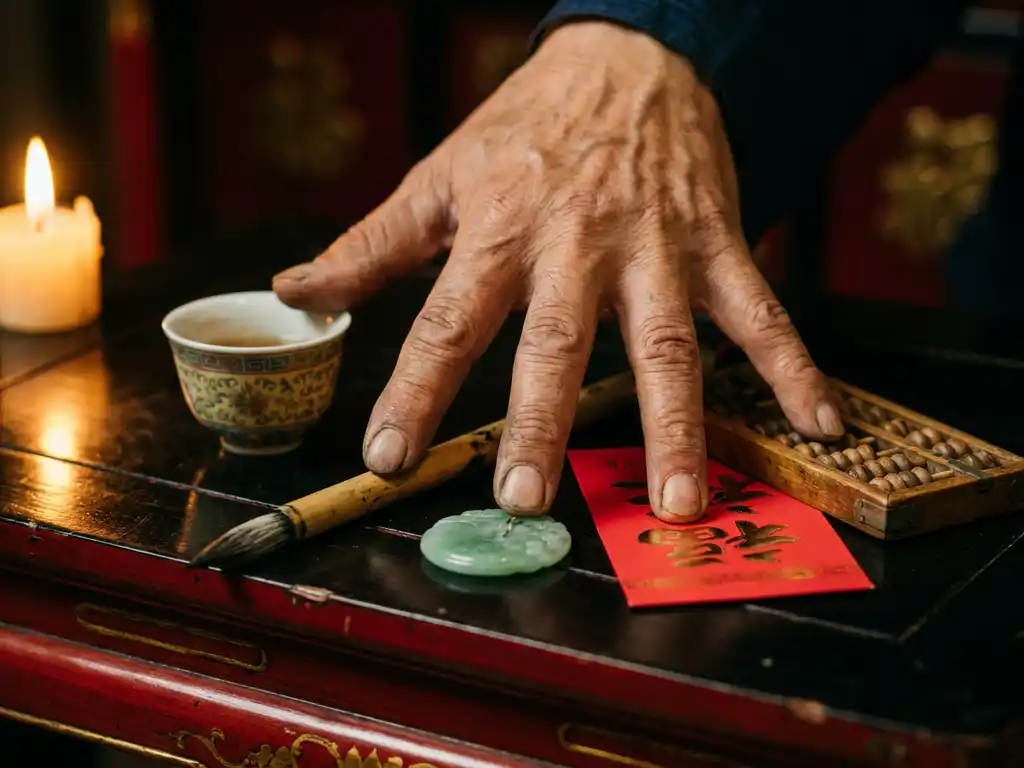
The 5 finger rule of China is a practical communication framework used in Chinese business and social settings to navigate hierarchy, respect, and relationship-building. Each “finger” represents a core principle that guides how professionals interact, make decisions, and build trust in Chinese contexts. Understanding this framework gives expatriates and international professionals a concrete tool for avoiding misunderstandings and working more effectively with Chinese colleagues and partners. Below, we unpack where the rule comes from, what each finger means, and how you can put it to work in your daily professional life.
Where does the 5 finger rule come from in Chinese culture?
The 5 finger rule originates from traditional Chinese philosophy, drawing on Confucian values that have shaped Chinese society for more than two thousand years. Confucianism places strong emphasis on hierarchical relationships, social harmony, and clearly defined roles within a group. The five-finger metaphor was developed as a teaching tool to make these deeply rooted cultural values accessible and memorable for both Chinese learners and international professionals trying to understand Chinese business culture.
The hand as a symbol is particularly fitting in this context. Just as five fingers work together to make a hand functional, the five principles work together to create smooth, respectful communication. Each finger is interdependent. Remove one and the hand loses its full capability. This reflects a core Chinese cultural belief: no individual element works in isolation. Relationships, context, hierarchy, and face all interact continuously.
While the rule is not an ancient proverb in the traditional sense, it draws on principles that are very much alive in modern Chinese workplaces. In 2026, as international business with China continues to grow across industries, this framework remains a relevant and practical guide for professionals preparing for assignments in China or working with Chinese teams globally.
What are the 5 fingers and what does each one represent?
The five fingers each represent a distinct principle of Chinese business etiquette and interpersonal communication. Together, they form a complete picture of how professional relationships function in China.
- Thumb (Respect for hierarchy): The thumb points upward and represents respect for authority and seniority. In Chinese organizations, rank matters significantly. Decisions flow from the top down, and showing deference to senior figures is not optional politeness but a fundamental expectation.
- Index finger (Pointing direction): The index finger represents clear guidance and leadership. In Chinese business settings, the most senior person in the room typically sets the direction. Interrupting or contradicting this guidance publicly can cause serious friction.
- Middle finger (Relationships and Guanxi): The middle finger, the tallest, represents Guanxi, the network of relationships and mutual obligations that underpins Chinese professional life. Building genuine trust over time is more important than any single transaction or contract.
- Ring finger (Harmony and face): The ring finger represents Mianzi, or “face,” and the broader concept of social harmony. Protecting someone’s face in front of others, avoiding direct confrontation, and preserving group harmony are all central to respectful Chinese business etiquette.
- Little finger (Patience and long-term thinking): The smallest finger represents patience. Chinese business culture tends to favor long-term relationship investment over short-term wins. Rushing decisions or pushing for quick closures can signal a lack of seriousness or respect.
How does the 5 finger rule affect communication in Chinese business?
The 5 finger rule shapes nearly every dimension of communication in Chinese business settings, from how meetings are structured to how disagreement is expressed. Understanding these dynamics helps international professionals read situations more accurately and respond in ways that build rather than damage relationships.
In meetings, the hierarchy principle means that the most senior person present often speaks first and last. Jumping ahead or offering unsolicited opinions before the senior figure has spoken can come across as disrespectful, even if the intention is enthusiasm or helpfulness.
The concept of face affects feedback and criticism profoundly. Direct, public criticism is generally avoided in Chinese professional settings because it risks embarrassing the recipient in front of others. Negative feedback tends to be delivered indirectly, often through a trusted intermediary or in a private setting. Foreign professionals who deliver blunt criticism openly may find that their Chinese counterparts withdraw or become less communicative, not out of agreement but as a way of managing the situation.
Guanxi also influences communication frequency and style. Regular informal contact, shared meals, and small gestures of goodwill are not social extras but active investments in the professional relationship. A colleague who only reaches out when they need something will find it much harder to build the kind of trust that makes business flow smoothly in China.
What happens when the 5 finger rule is ignored by foreign professionals?
When foreign professionals ignore the principles behind the 5 finger rule, the consequences are rarely dramatic or immediate. Instead, they tend to accumulate quietly: meetings become less productive, decisions slow down, and Chinese counterparts become harder to reach. The damage is often invisible until the relationship has already deteriorated significantly.
Ignoring hierarchy can create lasting resentment. If a foreign professional bypasses a senior Chinese colleague to communicate directly with junior team members, this can be interpreted as a sign of disrespect toward the senior person, even if the intention was simply efficiency.
Neglecting face can break trust quickly. A foreign manager who publicly corrects a Chinese colleague or expresses frustration openly in a group setting may find that the colleague becomes uncooperative or disengaged. The issue is not the feedback itself but the way it was delivered.
Underestimating the role of Guanxi often leads to failed negotiations. Deals that seem commercially sound can fall through if the relationship foundation has not been properly built. Chinese business partners often need to trust the person before they commit to the project. Skipping the relationship-building phase in favor of getting straight to business is one of the most common mistakes international professionals make.
For families relocating to China, these dynamics extend beyond the workplace. Social integration, school relationships, and neighborhood interactions all involve similar principles of respect, patience, and face. Families who receive intercultural E-Learning preparation before their assignment tend to adapt more confidently and avoid many of the early friction points that come from cultural misreading.
How can expatriates apply the 5 finger rule in daily work life?
Applying the 5 finger rule in daily work life means building small, consistent habits that reflect respect for Chinese cultural values rather than making grand gestures. The practical application is less about dramatic changes and more about adjusting your default behaviors in a series of concrete situations.
- Observe seating and speaking order in meetings. Pay attention to who sits where and who speaks first. Mirror the seniority signals you observe rather than defaulting to your own cultural habits around open discussion.
- Invest in informal relationship time. Accept invitations to meals, tea, or after-work activities. These are not distractions from work but a central part of how trust is built in Chinese professional culture.
- Deliver feedback privately. If you need to raise a concern or correct a mistake, do it one-on-one rather than in front of the group. This protects face and keeps the relationship intact.
- Slow down on decisions. If a Chinese partner seems to be taking time before committing, resist the urge to push. Patience signals that you value the relationship over the transaction.
- Learn a few phrases in Mandarin. Even basic greetings show effort and respect. This small gesture can have a disproportionately positive effect on how your Chinese colleagues perceive you.
- Use intermediaries when needed. If a sensitive issue needs to be raised, finding a trusted mutual contact to communicate it indirectly is often more effective than a direct conversation.
These habits take time to develop, especially for professionals coming from low-context cultures where directness is valued. The good news is that Chinese colleagues are generally understanding of cultural differences when they can see genuine effort and respect. Consistency matters more than perfection.
For professionals working across multiple countries, it helps to also understand how Chinese business norms compare with those in other markets. For example, Korean business culture shares some Confucian foundations with China but differs significantly in how hierarchy and group dynamics play out in practice.
How crossculture academy helps you master Chinese business etiquette
Understanding the 5 finger rule is a strong starting point, but applying it confidently in real professional situations takes structured preparation and practice. That is where we at crossculture academy come in. We offer targeted support for expatriates, international managers, and their families preparing for assignments in China or working with Chinese teams from abroad.
Here is what we provide to help you build genuine intercultural competence for China:
- Tailored China intercultural training programs covering business etiquette, communication styles, hierarchy, and Guanxi in depth
- Flexible E-Learning courses and micro-learning modules you can complete on your own schedule, wherever you are
- 500+ videos and articles covering real-world intercultural business situations
- A 24/7 expert hotline for live guidance when you face a specific intercultural challenge
- Family relocation support to help partners and children adjust to life in China alongside the professional assignment
- Access to more than 450 international trainers and consultants with direct personal experience in China
Whether you are preparing for your first posting to Shanghai or managing a Cross-Cultural team from Stuttgart, we give you the tools to work with confidence across cultural boundaries. Get in touch with us to find out which program fits your situation best.