
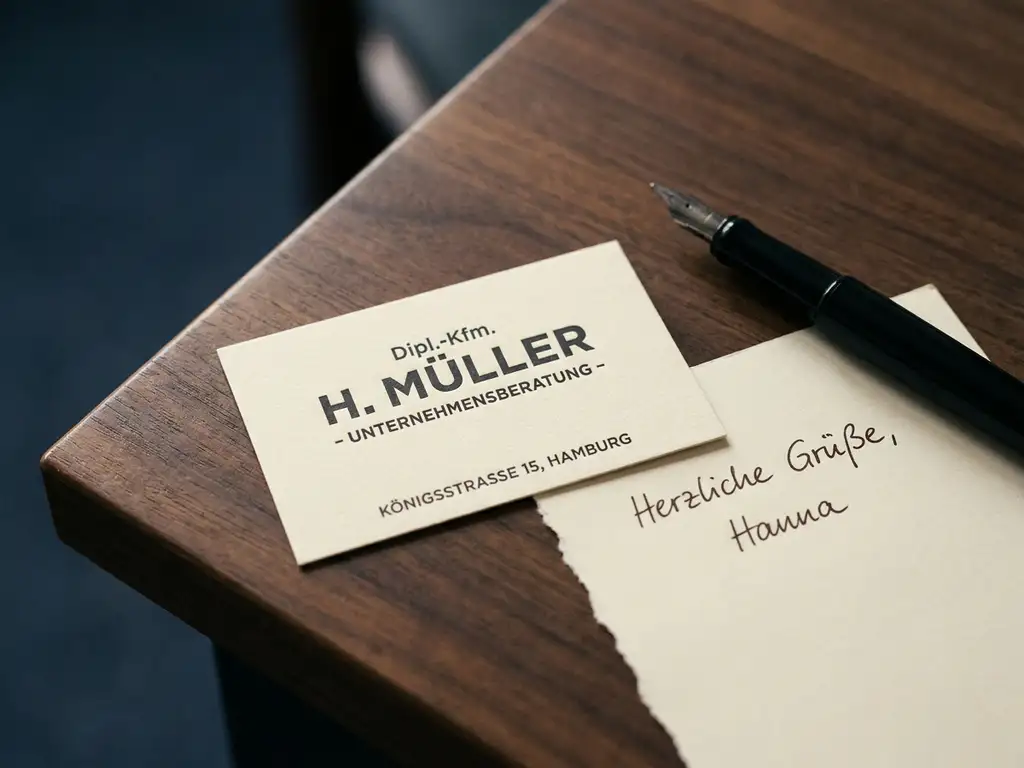
In German business culture, the default is to use formal titles and last names until someone explicitly invites you to switch to first names. The formal pronoun Sie (you, formal) is the standard starting point in professional settings, and using someone’s first name too soon can come across as presumptuous or disrespectful. The sections below walk through the specific situations, exceptions, and written conventions you need to know.
When is it appropriate to use ‘Du’ instead of ‘Sie’ in German business?
In German business culture, switching from Sie to Du is only appropriate after one person explicitly offers it. This offer, known as the Duzen invitation, almost always comes from the more senior person in the room or, in a peer situation, from the person who has been at the company longer. Until that invitation happens, stick with Sie.
The switch is not something you negotiate or hint at. The senior person will typically say something like “Wir können uns gerne duzen” (we can use first names) or simply introduce themselves by their first name only, which signals openness to informality. Once the offer is made and accepted, the informal address applies going forward. Reverting to Sie afterward would feel awkward and even slightly insulting.
A few situations where Du is more common from the start:
- Among younger colleagues of the same level who meet in an informal onboarding setting
- At team-building events or company retreats, where informal address sometimes carries over into daily work
- In industries with a traditionally flat culture, such as creative agencies or tech
Even in these cases, it is safer to wait and follow the lead of the person you are speaking with rather than assume.
What do German professional titles actually signal in the workplace?
In German business culture, professional titles signal expertise, seniority, and earned status. A person with a doctoral degree (Dr.) or a professorship (Prof.) typically expects those titles to be used in formal address. Ignoring them is not seen as casual or friendly; it reads as either careless or dismissive.
This applies especially in industries like law, medicine, engineering, and academia, where qualifications carry significant professional weight. In these fields, addressing someone as Herr Dr. Müller or Frau Prof. Schmidt is standard practice, not optional formality.
For people without academic titles, the standard form of address is Herr (Mr.) or Frau (Ms./Mrs.) followed by the last name. Job titles like Direktor or Geschäftsführer are not typically used in direct address the way they sometimes are in other cultures. You would not call someone Herr Direktor in most modern workplaces, though you might reference their role when introducing them to others.
How should you address a German colleague in writing vs. in person?
Written communication in German business follows stricter formality rules than spoken interaction. In emails and letters, the standard opening is Sehr geehrte Frau [Last Name] or Sehr geehrter Herr [Last Name], which translates roughly to “Dear Ms./Mr.” This applies even when you know the person reasonably well, unless you have already established a Du relationship.
If a Du relationship has been established, written communication shifts to Liebe [First Name] or Lieber [First Name], which is warmer and more personal. Mixing the two, for example writing Sehr geehrter Thomas, creates an awkward hybrid that signals uncertainty about the relationship.
In person, the rules are slightly more relaxed in tone, but the structure is the same. You greet someone with Guten Morgen, Herr Müller or Guten Tag, Frau Schmidt until the informal relationship is established. Handshakes are common, eye contact is expected, and jumping straight to a first name without an invitation will register as overstepping. If you are unsure, a good rule of thumb is to watch how German colleagues address each other and mirror that behavior.
Does the rule change in German startups or international companies?
Yes, the norms shift noticeably in startups and internationally oriented companies. Many German startups have adopted a company-wide Du policy, meaning everyone from the intern to the CEO uses first names and the informal pronoun from day one. This is a deliberate cultural choice, often influenced by Silicon Valley norms or by founders who want to signal flat hierarchies.
In international companies operating in Germany, especially those with headquarters in the US, UK, or the Netherlands, English may be the working language, which naturally sidesteps the Sie/Du question entirely. However, when those same colleagues switch to German, the informal habits from English conversations do not always carry over. It is worth paying attention to how German-speaking colleagues address each other in their own language, even within an otherwise international environment.
A few reliable signals that a company has adopted informal norms:
- The job posting or onboarding materials use Du to address applicants or new hires
- The company website or internal communications consistently use first names
- Your manager introduces themselves by first name only on the first day
When in doubt, ask. A simple “Wie sprechen wir uns an?” (How do we address each other?) shows cultural awareness rather than ignorance.
What mistakes do international professionals most often make with German address norms?
The most common mistake international professionals make in German business culture is defaulting to first names immediately, as they would in many English-speaking or Scandinavian workplaces. What feels friendly and approachable in one culture can read as presumptuous or unprofessional in a German context.
Other frequent missteps include:
- Omitting academic titles: Addressing a Dr. or Prof. without their title in a formal setting signals that you either did not notice or did not consider it important. Both impressions are unfavorable.
- Using first names in writing too soon: Even after a warm in-person meeting, reverting to formal written address is the safer choice until the relationship is clearly established as informal.
- Assuming the Du offer applies to everyone: If a senior colleague offers you the informal Du, that applies to your relationship with them specifically, not to the entire team or company.
- Translating English informality directly: Phrases like “Hey Thomas!” or starting an email with just a first name feel natural in English but can jar a German recipient who has not signaled openness to that level of familiarity.
- Not reciprocating the formal register: If a German colleague writes to you formally, match their register in your reply. Responding informally when they have used Sie and last names creates an imbalance that can feel uncomfortable.
The underlying principle is simple: in German business culture, formality is a sign of respect, not distance. Matching the register of the person you are speaking with, and waiting for them to signal a shift, is the most reliable approach. If you are preparing for an international assignment in Germany, getting comfortable with these norms before you arrive will save you from awkward moments on day one.
How crossculture academy helps you navigate German business culture
Understanding address norms is just one piece of the puzzle when working with German colleagues, clients, or partners. We at crossculture academy offer targeted intercultural training that helps international professionals build genuine confidence in German business settings and beyond.
Here is what we offer to support you:
- Country-specific intercultural training covering German workplace norms, communication styles, hierarchy, and meeting culture
- Flexible E-Learning courses you can complete at your own pace, wherever you are based
- Live coaching and classroom training for deeper, personalized preparation before an assignment or relocation
- A 24/7 expert hotline for real-time guidance when intercultural questions come up on the job
- 500+ videos and articles covering practical situations across more than 140 target countries
Whether you are preparing for your first business trip to Germany or relocating your entire family, we can help you feel prepared and confident from the start. Get in touch with us to find the right training format for your situation.