
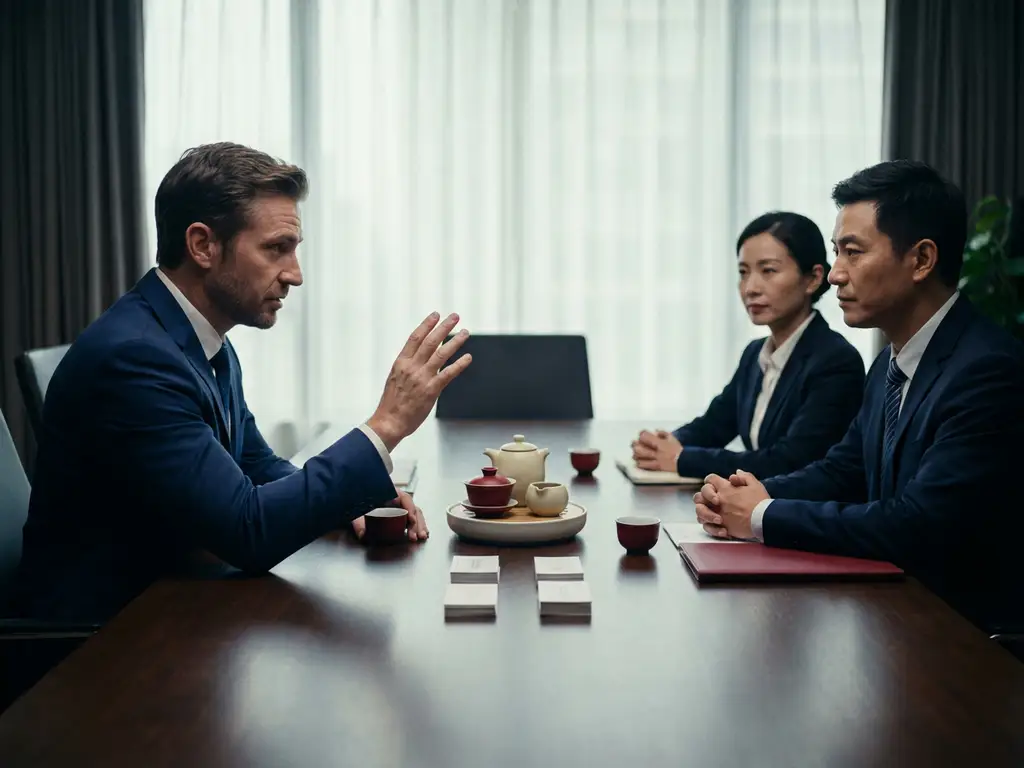
The biggest mistakes foreigners make when negotiating in China come down to one core misunderstanding: applying Western logic to a system built on entirely different values. Most Western professionals walk into Chinese negotiations expecting directness, speed, and deal-focused conversations. Instead, they find indirect communication, long relationship-building phases, and decisions that seem to happen outside the meeting room. Understanding the business culture in China before you negotiate is not optional. It is the difference between closing a deal and wondering why the other side stopped returning your calls. This article unpacks the most common pitfalls and how to avoid them.
Why do Western negotiation tactics fail in China?
Western negotiation tactics fail in China because they prioritize efficiency and contract terms over relationships and trust. In China, the negotiation process is rarely about the deal alone. It is about building confidence in you as a person and as a long-term partner. Pushing hard for quick decisions or treating the contract as the finish line signals that you do not understand how business works in China.
Western professionals often arrive with a fixed agenda, a tight timeline, and a transactional mindset. They want to move from introduction to agreement as fast as possible. In China, this approach reads as impatient at best and disrespectful at worst. The relationship must be established before business can happen. Rushing that process does not speed things up. It usually slows things down or kills the deal entirely.
Another common failure point is assuming that a signed contract ends the negotiation. In China, agreements are often seen as a starting point, not a final word. Flexibility and ongoing dialogue are expected even after contracts are signed. Treating every deviation from the written terms as a breach of trust will frustrate both sides.
What role does ‘face’ play in Chinese business negotiations?
Face, known in Chinese as mianzi and lian, plays a central role in negotiating in China. It refers to a person’s social reputation, dignity, and standing in the eyes of others. Causing someone to lose face, even unintentionally, can damage or destroy a business relationship. Protecting and giving face to your counterpart is one of the most practical skills you can develop before entering any Chinese negotiation.
Losing face can happen in surprisingly subtle ways. Criticizing someone in front of colleagues, saying no too directly, or pushing someone into a corner where they cannot agree without looking weak are all face-threatening moves. Even giving someone a cheap or poorly wrapped gift can signal disrespect.
Giving face, on the other hand, builds goodwill quickly. Acknowledging someone’s seniority publicly, praising their company’s achievements, or deferring to their expertise in front of others all strengthen the relationship. When you make your counterpart look good, they are far more likely to want to do business with you.
Understanding face also explains why Chinese negotiators rarely say a flat “no.” A direct refusal causes both parties to lose face. Instead, you will hear phrases like “that might be difficult” or “we need more time to consider.” Learning to read these indirect signals is a practical skill that directly affects your negotiation outcomes.
How does guanxi affect negotiation outcomes in China?
Guanxi, which translates roughly as a network of relationships and mutual obligations, directly affects whether negotiations in China succeed or fail. Strong guanxi with your Chinese counterpart means they trust you, want to help you, and will advocate for you internally. Without it, you are essentially a stranger asking for favors, and that is a weak position to negotiate from.
Guanxi is built over time through shared meals, social interactions, small gestures of generosity, and consistent follow-through on commitments. It is not something you can manufacture in a single meeting or establish purely through professional credentials. The time you invest before the formal negotiation begins is often what determines the outcome of the negotiation itself.
Guanxi also functions as a kind of informal insurance. When problems arise, as they always do in complex business relationships, a strong guanxi network gives you a foundation for resolving them without the relationship breaking down. Without it, disputes are much harder to navigate because there is no reservoir of trust to draw from.
If you are new to the Chinese market, working through an intermediary who already has established guanxi with your target counterpart can dramatically improve your starting position. This is a well-established practice and not seen as unusual. It signals that you understand how relationships work in China.
What are the most common communication mistakes in China negotiations?
The most common communication mistakes when negotiating in China include interpreting silence as agreement, missing indirect signals of disagreement, speaking too bluntly, and over-relying on written communication at the expense of face-to-face interaction. Each of these mistakes stems from applying communication norms that work in Western contexts but misfire in China.
- Interpreting silence as agreement: Silence in Chinese communication often signals discomfort, disagreement, or the need for more time. It is rarely a sign that the other party is on board.
- Missing indirect “no” signals: Phrases like “we will study this further,” “this could be complicated,” or a sudden change of subject are polite ways of declining. Treating them as neutral or positive responses leads to serious misunderstandings.
- Being too direct: Blunt feedback, direct criticism, or aggressive bargaining tactics create discomfort and signal a lack of cultural awareness. Directness that feels honest in a Western context feels rude in a Chinese one.
- Over-relying on email: Important relationship-building and negotiation steps happen in person, at dinners, and over tea. Trying to resolve sensitive issues over email rather than face-to-face often produces poor results.
- Using humor carelessly: Humor that works across Western cultures can easily fall flat or cause offense in China, particularly if it involves sarcasm or self-deprecation that could be misread.
Learning to navigate Chinese business culture means developing a sensitivity to what is not being said as much as what is.
Should you send a senior executive to negotiate in China?
Yes, sending a senior executive to negotiate in China is strongly advisable, especially for important deals. Hierarchy matters deeply in Chinese business culture. Sending a junior representative to meet with senior Chinese counterparts signals either that you do not take the relationship seriously or that your company lacks the structure and authority to make real commitments. Both interpretations damage your position.
Chinese organizations tend to be hierarchical, and decisions flow through seniority. When you send someone of equivalent or higher rank to your counterpart, you show respect for their position and demonstrate that your company is fully engaged. This gesture alone can open doors that a well-prepared junior negotiator simply cannot.
This does not mean senior executives need to handle every detail. In practice, a senior leader often sets the tone, builds the relationship at the right level, and signals commitment, while more junior team members handle technical and operational discussions. What matters is that the right level of seniority is visible and present at the right moments.
If your senior executive has no experience with the business culture in China, sending them unprepared can cause as many problems as sending the wrong person. Preparation and cultural awareness at every level of the team are just as important as rank.
How can intercultural training improve China negotiation results?
Intercultural training improves China negotiation results by giving professionals a concrete understanding of the values, communication styles, and social expectations that shape how Chinese business partners think and behave. Rather than learning through costly mistakes, trained negotiators arrive prepared to build relationships correctly, read indirect signals, and respond in ways that build rather than damage trust.
The practical benefits of intercultural training for China negotiations include:
- Understanding how face and hierarchy influence every stage of a negotiation
- Recognizing indirect communication patterns and knowing how to respond
- Building guanxi intentionally and appropriately before and during negotiations
- Avoiding common protocol mistakes around gifts, meals, and formal introductions
- Knowing how to handle disagreements without causing either party to lose face
- Adapting your communication style to match the expectations of your Chinese counterparts
Professionals who have gone through targeted intercultural preparation consistently report better negotiation experiences and stronger long-term business relationships in China. The investment in preparation pays off not just in individual deals but in the quality and durability of the partnerships that follow. You can also explore intercultural video resources and E-Learning courses to build this knowledge at your own pace.
How crossculture academy helps you negotiate successfully in China
At crossculture academy, we specialize in preparing professionals and organizations for exactly these kinds of challenges. Our China-focused intercultural training combines deep country expertise with practical, real-world application so that your team is ready before they walk into the room.
- Country-specific China training: Our China intercultural training covers business culture, negotiation dynamics, communication styles, and relationship-building in depth
- Flexible learning formats: From classroom and coaching sessions to E-Learning and blended learning, we adapt to your team’s schedule and learning preferences
- Expert trainers with lived experience: We work with trainers and consultants who have personal experience navigating intercultural challenges in China, not just theoretical knowledge
- 24/7 expert hotline: Our intercultural expert hotline is available around the clock for live guidance when you face real-time business situations
- Tailored solutions for organizations: Whether you are sending one executive or preparing an entire team, we design programs that fit your specific context and goals
If you are preparing for negotiations in China and want to walk in with confidence, we are here to help. Get in touch with us to find the right training solution for your team.