
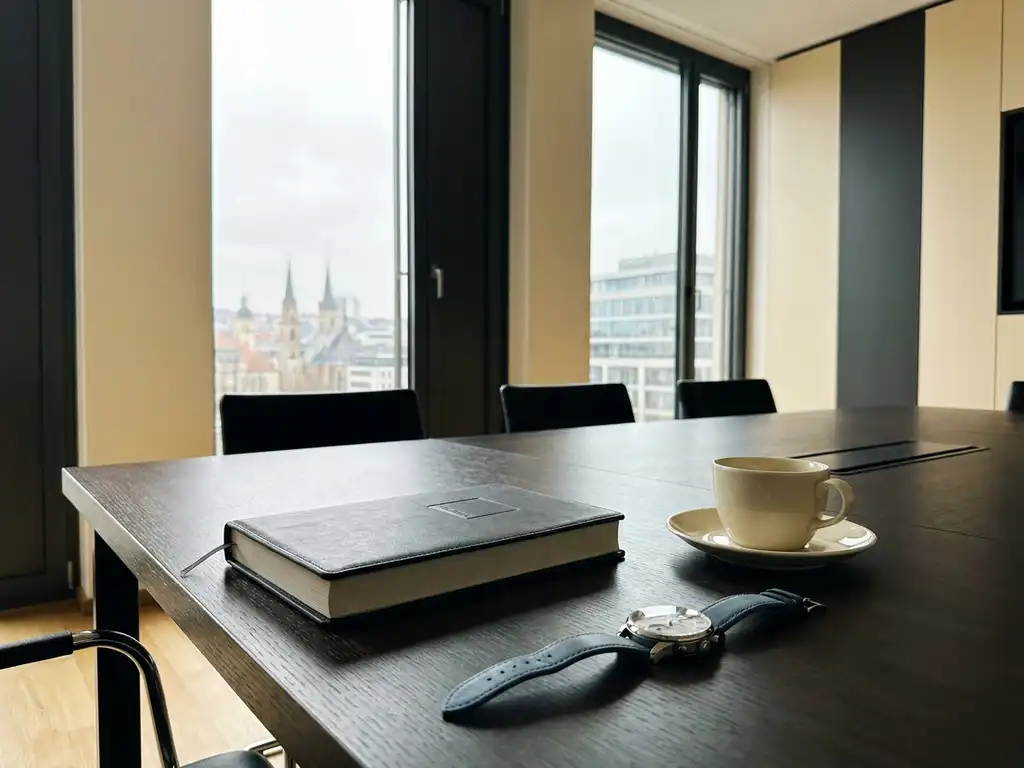
Germans expect business meetings to be structured, purposeful, and efficient. Participants should arrive on time, come fully prepared, and engage in direct, fact-based discussion. Small talk is brief, agendas are followed closely, and decisions typically come after careful deliberation rather than in the room. If you are heading into a professional setting in Germany, this guide covers everything you need to know.
How do Germans typically structure a business meeting?
German business meetings follow a clear, agenda-driven format. There is usually a defined start time, a written agenda distributed in advance, and a structured flow from one topic to the next. Participants are expected to stick to the agenda, and going off-topic is generally discouraged. The meeting ends when the agenda items have been addressed, not when the conversation naturally winds down.
This structured approach reflects a broader value in German business culture: respect for everyone’s time and a focus on outcomes. Meetings are not seen as spaces for brainstorming or open-ended exploration unless that has been explicitly built into the agenda. If a topic comes up that was not planned, it is common to defer it to a follow-up meeting rather than address it on the spot.
Roles in the meeting are often clearly defined. The person leading the meeting typically controls the flow, and contributions from participants are expected to be relevant and substantive. Interrupting a speaker or jumping between topics is considered disrespectful.
Why is punctuality so important in German business culture?
Punctuality in German business culture signals professionalism, reliability, and respect for others. Arriving late to a meeting, even by a few minutes, is taken seriously and can damage your credibility before you have said a word. Being on time is not just a courtesy in Germany; it is a baseline expectation.
This attitude toward time connects to a broader cultural value around planning and dependability. Germans tend to plan their schedules carefully, and a late arrival disrupts not just the meeting but the entire day’s structure for everyone involved. If you know you will be delayed, calling ahead is appreciated but does not fully offset the impression a late arrival creates.
For international professionals working with German colleagues, this is one of the most practical adjustments to make. Aim to arrive a few minutes early rather than exactly on time, and treat the meeting start time as fixed rather than approximate.
What communication style do Germans prefer in meetings?
Germans prefer direct, clear, and fact-based communication in business meetings. They value honesty over diplomacy, which means feedback can feel blunt compared to communication styles in other cultures. A German colleague who disagrees with your proposal will likely say so plainly rather than soften the message with vague language.
This directness is not rudeness. It reflects a cultural preference for transparency and efficiency. Germans generally trust people who speak clearly and back up their points with data or reasoned arguments. Vague statements or overly enthusiastic language without substance can actually reduce your credibility in a German business setting.
Written communication follows similar principles. Emails and reports tend to be precise and formal. Casual language or excessive friendliness in professional written communication can come across as unprofessional rather than warm. If you are preparing materials for a meeting with German partners, focus on clarity, accuracy, and logical structure over persuasive tone.
How should you prepare before a meeting with German colleagues?
Before a meeting with German colleagues, you should review the agenda thoroughly, prepare your contributions in detail, and bring any relevant data or documentation. Germans respect thorough preparation and will notice if you come unprepared. Walking into a meeting without having done your homework sends a signal that you do not take the collaboration seriously.
Here are some practical steps to prepare effectively:
- Read the agenda carefully and understand what is expected of you for each item
- Prepare specific, well-reasoned positions rather than general opinions
- Bring supporting documents, data, or examples that back up your points
- Anticipate questions and think through your answers in advance
- Confirm logistics such as location, time, and attendees ahead of time
If you are new to working with German colleagues, investing time in understanding the cultural context before the meeting is just as useful as preparing the content itself. Our intercultural E-Learning courses can help you build that foundation quickly and at your own pace.
What topics are appropriate for small talk in German business settings?
In German business settings, appropriate small talk topics include travel, regional culture, food, sports (particularly football), and local events. Small talk does happen, but it is typically brief and kept at the start of a meeting before the agenda begins. Germans do not generally use small talk to build rapport over an extended period the way some other cultures do.
Topics to avoid include personal questions about salary, family status, age, or religion. Politics can be sensitive depending on the context and the relationship. Complimenting someone excessively or using overly personal language too early in a professional relationship can feel uncomfortable rather than friendly.
The purpose of small talk in German business culture is to ease the transition into the meeting, not to establish a deep personal connection before getting to work. Keeping it light, genuine, and short is the right approach. Once the meeting starts, the expectation is that everyone shifts fully into professional mode.
How do Germans make decisions after a business meeting?
Germans typically make decisions after careful, thorough analysis rather than quickly or impulsively. After a business meeting, it is common for the relevant stakeholders to review the information discussed, consult with their teams, and reach a consensus before committing to a course of action. This process can take longer than in some other business cultures, but the decisions that come out of it tend to be firm and well-supported.
This deliberate approach to decision-making is rooted in a strong preference for risk reduction and thoroughness. Germans are generally more comfortable taking time to get a decision right than moving fast and adjusting later. If you push too hard for a quick decision, it can create friction and signal that you have not fully thought things through yourself.
Once a decision has been made, however, it is usually treated as final. Reversing or renegotiating a decision after the fact is uncommon and can damage trust. Understanding this dynamic helps international professionals set realistic timelines and manage expectations on both sides. For a deeper look at how cultural differences shape professional interactions, our intercultural video library covers a wide range of real-world business scenarios.
How crossculture academy helps you navigate German business culture
Understanding German business culture intellectually is a good start, but applying it confidently in real situations takes practice and the right preparation. At crossculture academy, we help professionals and their families develop exactly that kind of practical intercultural competence.
Here is what we offer to support your preparation:
- Country-specific intercultural trainings covering communication styles, meeting culture, and professional norms in Germany and more than 140 other target countries
- Flexible E-Learning courses that you can complete on your own schedule, without location constraints
- 500+ videos and articles covering real intercultural business situations
- A 24/7 expert hotline for advice when you face a specific intercultural challenge
- Coaching and blended learning options for individuals and teams
Whether you are preparing for your first business trip to Germany, relocating for an assignment, or managing a Cross-Cultural team, we have the tools to help you feel confident and prepared. Get in touch with us to find out which solution fits your situation best.